Kai Albrecht · 7 October 2026
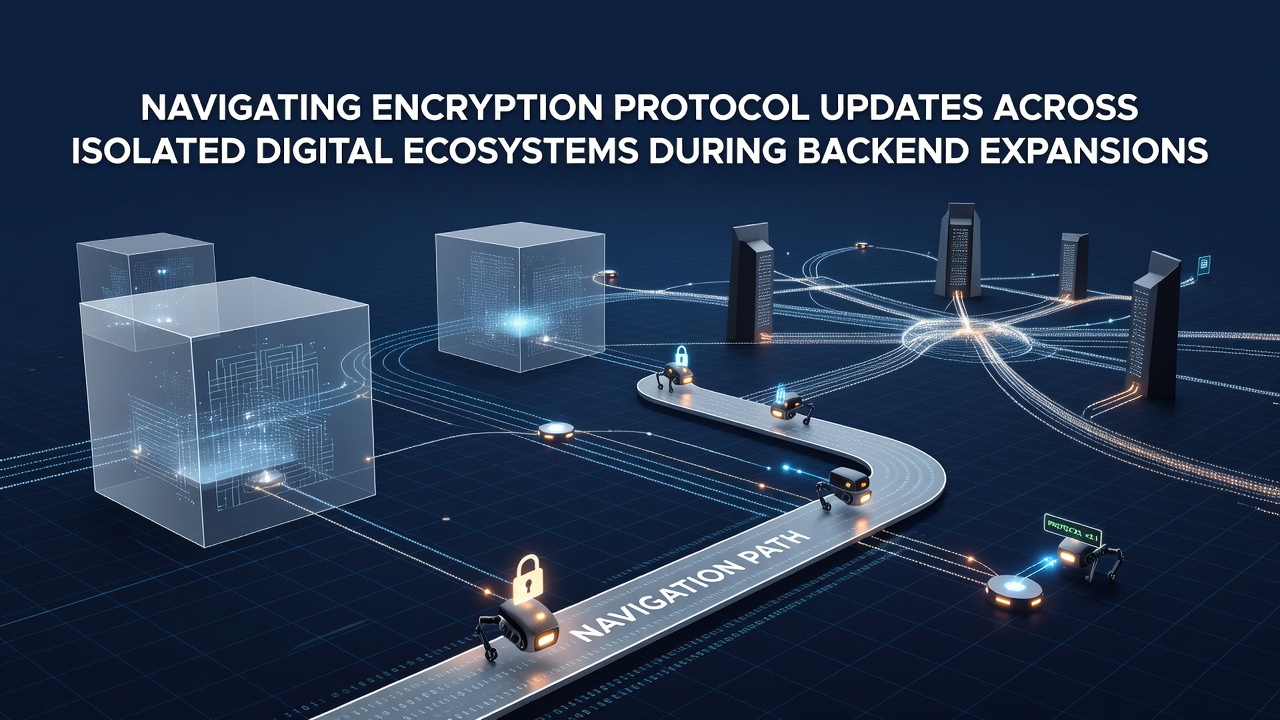
Navigating Encryption Protocol Updates Across Isolated Digital Ecosystems During Backend Expansions
Organizations managing backend expansions often encounter the need to refresh encryption protocols while operating within isolated digital ecosystems that limit direct data exchange. These environments typically consist of segmented networks, air-gapped components, and regionally distributed systems where updates cannot propagate through standard centralized mechanisms. Data from infrastructure reports indicate that such setups require phased synchronization strategies to avoid service disruptions during growth periods. Researchers at institutions studying distributed systems have documented that protocol updates, such as shifts toward stronger key exchange methods, demand coordinated testing across each isolated segment. In October 2026 several large-scale deployments are scheduled to align with revised standards from the National Institute of Standards and Technology, which outline transition timelines for algorithms used in secure communications.Challenges in Protocol Synchronization
Backend expansions introduce new nodes and storage layers that must adopt updated encryption without compromising existing isolation boundaries. Observers note that certificate rotation and key distribution become complex when systems cannot share real-time status information. Studies from academic groups tracking cloud migrations show that mismatched protocol versions between segments can create temporary vulnerabilities during the expansion window.
Engineers frequently rely on manual verification processes and staged rollouts to ensure each ecosystem component receives the necessary updates. This approach allows teams to validate compatibility with legacy hardware before full integration occurs. Figures from industry analyses reveal that organizations using automated orchestration tools still allocate significant resources to manual audits in isolated setups.
Implementation Approaches Across Segments
Teams addressing these updates often establish dedicated coordination points that operate outside the primary isolated networks. These points collect configuration data from each segment through secure transfer mechanisms and then distribute updated protocol parameters in batches. One documented case involved a multi-region data platform that completed its transition by prioritizing core authentication services first, followed by auxiliary logging systems.

Additional strategies include embedding version negotiation capabilities into the new backend components so they can gracefully handle connections from both updated and legacy segments. Data collected during similar expansions shows that this method reduces rollback incidents by maintaining fallback options until full compliance is verified across all areas.
Monitoring and Validation Procedures
Continuous monitoring becomes essential once updates begin, because isolated ecosystems may exhibit delayed detection of protocol mismatches. Specialists deploy localized logging agents that report aggregated metrics without transmitting raw traffic data. Reports from regulatory bodies in the European Union highlight the importance of maintaining audit trails that demonstrate compliance with encryption requirements throughout the expansion process.
Validation typically involves cross-referencing cryptographic handshake logs from each segment against expected protocol versions. Organizations that completed comparable projects in prior years reported using simulation environments to replicate expansion scenarios before applying changes to production systems. These rehearsals help identify edge cases where certain devices resist protocol negotiation updates.
Conclusion
Effective navigation of encryption protocol updates in isolated digital ecosystems during backend expansions relies on structured planning, localized validation, and adherence to established standards. Organizations that follow documented transition frameworks from authoritative sources reduce the risk of service interruptions while meeting security benchmarks. As expansions continue into late 2026, coordination methods developed for these scenarios provide a repeatable model for maintaining protocol consistency across disconnected components.