Erik Washington · 20 October 2026
Resource Allocation Strategies Within Specialized Virtual Networks During Growth Periods
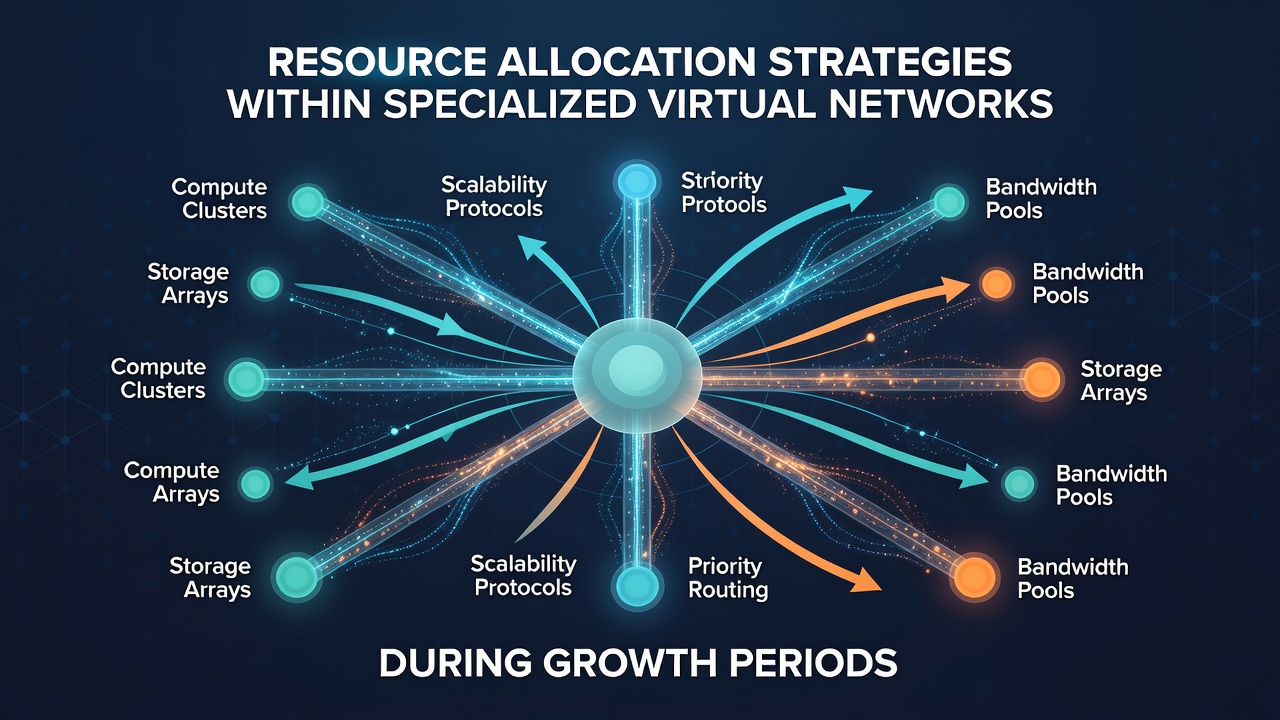
Specialized virtual networks rely on precise resource allocation methods to maintain performance as user bases and data flows expand, and organizations apply these methods across software-defined environments where virtual machines and containers share underlying hardware. Researchers track allocation patterns through metrics such as latency, throughput, and compute utilization, while network operators adjust parameters in real time to prevent bottlenecks during scaling events.
Core Components of Resource Distribution
Virtual network functions operate on abstracted layers that separate control planes from data planes, allowing administrators to assign bandwidth, memory, and processing cycles without physical rewiring. Studies from the National Institute of Standards and Technology document how these abstractions enable granular controls that respond to traffic spikes, and figures from 2025 implementations show allocation accuracy improving by measurable percentages when automation scripts replace manual adjustments.
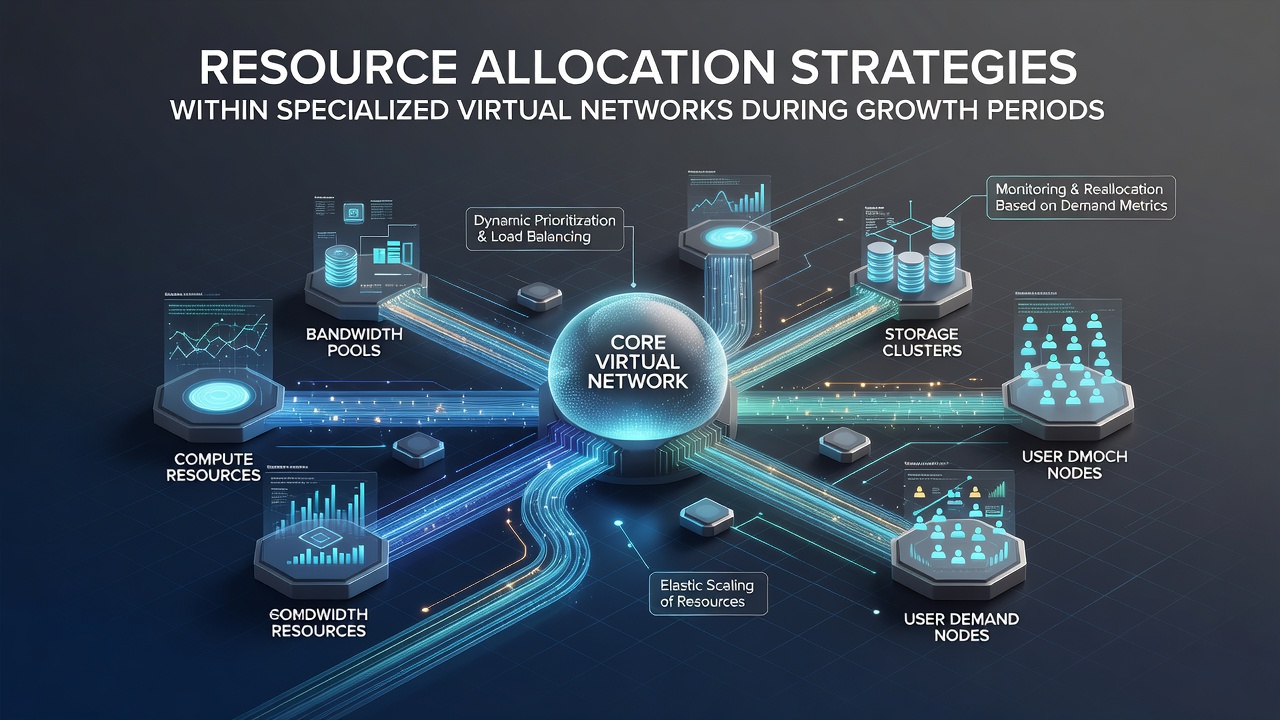
One approach centers on dynamic pooling, where unused capacity from idle nodes transfers to active segments during peak loads. Another method uses threshold-based triggers that activate additional virtual instances once utilization crosses predefined limits, and data collected across multiple deployments indicates these triggers reduce service interruptions when calibrated against historical traffic logs.
Growth Phase Dynamics and October 2026 Observations
Expansion periods introduce variables such as sudden connection surges and new service integrations that alter demand curves. In October 2026, reports compiled by Canadian digital infrastructure agencies highlighted how specialized networks handling healthcare data exchanges managed concurrent growth in remote monitoring devices by redistributing storage resources across regional clusters. Those reports noted that networks employing predictive models based on machine learning forecasts achieved steadier performance metrics compared with static reservation schemes.
Allocation algorithms often incorporate feedback loops that monitor packet loss rates and queue depths, then recalibrate priorities accordingly. Observers note that networks supporting financial transaction systems during quarterly reporting cycles apply these loops to shift encryption processing loads away from saturated paths, which maintains compliance with throughput requirements set by regulatory bodies.
Implementation Techniques Across Different Scales
Smaller deployments frequently begin with rule-based schedulers that assign fixed percentages of resources to each virtual segment, yet these setups require manual review when traffic patterns deviate from initial projections. Larger operators integrate orchestration platforms that coordinate allocation across geographically dispersed data centers, and evidence from academic papers published by Australian university research groups shows orchestration layers cut provisioning times from hours to minutes during simulated growth scenarios.
Load balancing mechanisms distribute incoming requests across available virtual instances, while bandwidth reservation protocols guarantee minimum capacities for critical services even as overall volume rises. Experts tracking European network operators have recorded cases where hybrid strategies combining reservation with opportunistic sharing delivered consistent results through successive expansion phases.
Monitoring and Adjustment Protocols
Continuous telemetry feeds supply the raw data needed for allocation decisions, and visualization dashboards translate those feeds into actionable alerts. Technicians review aggregated statistics on a weekly basis to identify recurring patterns, then refine allocation weights before the next growth cycle begins. Research indicates that networks incorporating anomaly detection within their monitoring stacks detect resource contention earlier, which allows preemptive rebalancing rather than reactive fixes.
Security constraints further shape allocation choices because encryption overhead consumes additional cycles on certain nodes. Administrators therefore reserve dedicated virtual resources for cryptographic tasks during high-volume periods, and this separation prevents interference with latency-sensitive applications running on adjacent segments.
Conclusion
Resource allocation within specialized virtual networks during growth periods depends on layered strategies that combine automation, monitoring, and adaptive scheduling to sustain service levels. Organizations continue to refine these approaches through data gathered from live environments, and ongoing work by standards bodies supports consistent frameworks that scale across industries.